By: Robert
Kwaku Annor
Indonesia must begin
preparing for the cybersecurity risks posed by quantum computing now, with
experts from academia, research and industry warning that organisations need to
plan for the transition to encryption methods capable of withstanding future quantum-enabled
attacks.
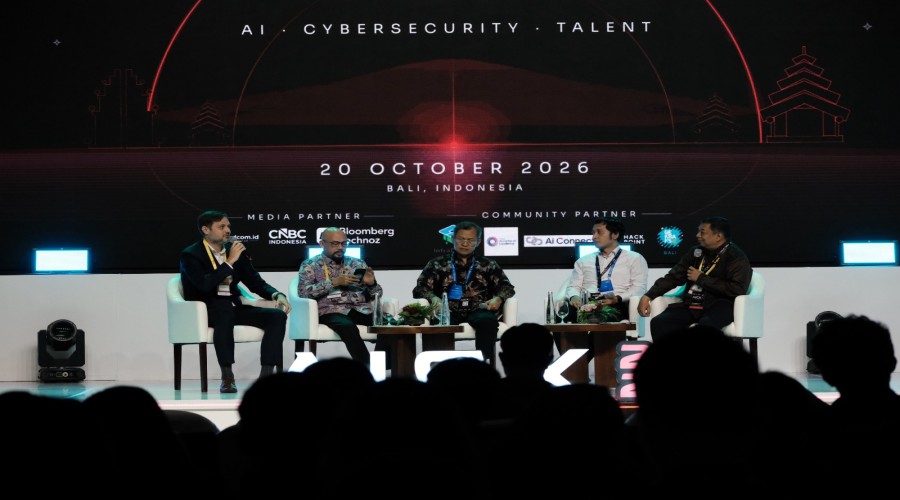
The call was made at AICX
2026, organised by Indonesian cybersecurity and artificial intelligence company
PT ITSEC Asia Tbk, where speakers from Institut Teknologi Bandung (ITB), the
National Research and Innovation Agency (BRIN) and the Indonesian AI research
and innovation collaboration body KORIKA discussed the country’s readiness for
quantum computing.
The discussions centred on
the risk known as “harvest now, decrypt later”, in which adversaries collect
encrypted data today in the hope of decrypting it in the future as quantum
technology advances.
Although current quantum
computers cannot yet break widely used RSA encryption, experts said
organisations should identify the cryptographic systems they rely on, determine
which data requires long-term protection and plan a transition to post-quantum
cryptography (PQC).
The issue was addressed
during a panel session titled “Beyond the Cryptographic Cliff: Quantum, Cyber
and The Next Defense”, held at the Bali Beach Convention Center in Sanur, Bali.
“Preparing for the quantum
threat needs to start now, rather than waiting until quantum computers can
break the encryption systems we rely on. Organisations need to map their
cryptographic systems, identify their most critical data and begin planning
their transition to post-quantum cryptography,” said Marek Bialoglowy, Vice
President Director, Chief Technology Officer and Co-Founder of ITSEC Asia.
“This migration takes time,
so the earlier we prepare, the better positioned we will be to protect our
digital assets. The same applies to AI: the models and data organisations are
building today need protection that still holds in a quantum era,” he added.
Prof. Andriyan Bayu
Suksmono, Professor at the School of Electrical Engineering and Informatics at
ITB, urged Indonesia to prepare for the earliest possible timeline for
significant quantum computing advances.
“We have to be very careful
in facing this issue. Some predictions place the quantum computing breakthrough
between 2030 and 2035, while others suggest it could take longer. I believe we
should prepare for the earliest timeline and treat 2030 as a planning
reference,” he said.
Suksmono said AICX 2026
provided an opportunity to accelerate awareness and adoption of quantum
computing in Indonesia by bringing academics and industry together.
He explained that
post-quantum cryptography offers one way to address the emerging threat, using
algorithms designed to resist attacks from quantum computers. These algorithms
can be implemented on existing devices, including mobile phones, computers and
servers.
Another approach is quantum
key distribution (QKD), which uses quantum principles to support secure key
distribution.
Dr. Mohammad Hamzah Fauzi,
Head of the Quantum Physics Research Center at BRIN, said progress in the field
had challenged earlier expectations about when useful quantum computers would
become available.
“In 2018, I attended a
conference in Montpellier, France, where a prominent physicist was asked when
we would have a useful quantum computer. His answer was, ‘Not in my lifetime.’
That prediction is clearly being challenged today, as we continue to make progress
in that direction,” he said.
Fauzi added that research
centres needed partnerships with the security industry to help translate
advances in quantum technology into practical applications.
“For that progress to reach
users, research centres like ours need partners from the security industry, and
we are glad to have a company like ITSEC Asia willing to work on this with us,”
he said.
Prof. Dr. Ir. Hammam Riza,
Chairman of KORIKA, said quantum technology would have implications for the
foundations supporting artificial intelligence, even though it was not
currently covered by Indonesia’s AI roadmap.
“The AI roadmap does not
currently cover quantum, but quantum will be part of the trust infrastructure
for AI. Quantum computing is just one of the emerging technologies that
Indonesia needs to master,” he said.
Riza welcomed ITSEC Asia’s
efforts to raise the issue before the roadmap was completed, noting the
company’s work at the intersection of AI and security.
Speakers also emphasised the
need for investment in research, education and talent development, with
expertise requiring collaboration across physics, engineering, information
security and digital systems development.
Bialoglowy said ITSEC Asia
would continue working with ITB, BRIN and KORIKA to raise quantum readiness in
Indonesia.
“AICX brings quantum, AI and
cybersecurity into one conversation because the three will have to be secured
together. We are grateful to ITB, BRIN and KORIKA for sharing their expertise,
and ITSEC Asia will keep working with them to raise quantum readiness in
Indonesia,” he said.
Through AICX 2026, ITSEC
Asia is encouraging collaboration among industry, government, academia and
research communities to strengthen Indonesia’s long-term digital resilience as
AI and other emerging technologies advance.